
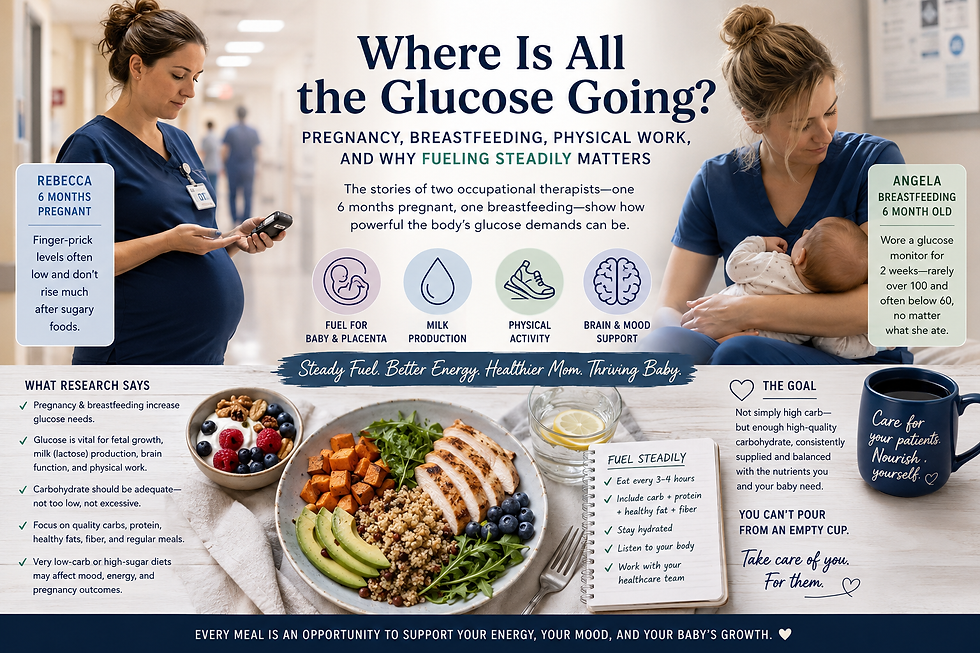
Where Is All the Glucose Going? Pregnancy, breastfeeding, physical work and the question of whether women need more carbohydrates.
By: Dr. Kim Byrd-Rider, PT, DPT
Two occupational therapists I work with recently gave me an unexpected window into the energy demands of pregnancy and breastfeeding.
Angela is breastfeeding her six-month-old baby. Rebecca is six months pregnant.
Both work full-time in a hospital. This is not a desk job. They spend roughly 75% of a 40-hour workweek on their feet—walking long hospital corridors, assisting patients out of bed, helping them stand, transferring them to chairs, and sometimes supporting much of a patient’s body weight while helping them use the bathroom.
Their work requires strength, endurance, concentration, patience, and emotional steadiness.
Yet both women began noticing remarkably low glucose readings.
Angela wore a continuous glucose monitor for two weeks. Even after eating cookies, pasta, sugar, and other carbohydrate-rich foods, her glucose rarely rose above 100 mg/dL. At times, the monitor showed readings below 60 mg/dL.
Rebecca, who was asked by her physician to check her blood glucose with a finger-stick meter during pregnancy, noticed something similar. Her levels were often low and did not seem to rise very much after sugary foods.
The obvious question was:
Where was all that glucose going?
And an equally important question followed:
Should pregnant or breastfeeding women with physically demanding jobs eat a high-carbohydrate diet—or even “carb-load”—to protect their energy, mood, and babies?
The answer is more nuanced than simply eating more sugar.
Pregnancy and breastfeeding create powerful demands for glucose
Glucose is one of the body’s primary fuels. The brain depends heavily on it, working muscles use it, the placenta transports it, the developing fetus relies on it, and the mammary gland uses glucose to produce lactose—the principal carbohydrate in human milk.
During pregnancy, the mother’s metabolism changes so that nutrients can be continuously supplied to the growing fetus. Glucose crosses the placenta and is a major fetal fuel. The placenta itself also consumes glucose. This increased maternal-fetal demand can contribute to lower fasting glucose levels during pregnancy, particularly between meals and overnight. (PubMed Central (PMC))
Pregnancy, however, does not usually make the mother uniformly more insulin-sensitive.
As pregnancy progresses, placental hormones generally increase insulin resistance. This helps preserve circulating nutrients for the fetus, but it can also cause higher post-meal glucose in some women and is one reason gestational diabetes often appears in the second or third trimester. (Diabetes Journals)
Therefore, Rebecca’s lower fasting readings could be consistent with the greater glucose demands of pregnancy, her physical activity, the timing of her testing, or her individual insulin response. But pregnancy alone does not fully explain repeated values below 60 mg/dL or a complete lack of response to carbohydrate.
Those readings deserve confirmation and discussion with her prenatal clinician.
Breastfeeding creates another major glucose pathway
Angela’s situation is different but equally fascinating.
Milk production is metabolically expensive. The mammary gland draws nutrients from the maternal circulation and uses glucose to synthesize lactose. Lactose helps determine the volume of milk produced, making glucose an important substrate for lactation.
Breastfeeding mothers also have increased total energy needs. Current guidance estimates that well-nourished breastfeeding women generally require approximately 330–500 additional calories per day, depending on the stage of lactation, body size, activity, and how exclusively they are breastfeeding. (ACOG)
Lactation can also improve insulin sensitivity and is associated with lower maternal glucose and insulin levels, particularly among women who previously experienced gestational diabetes. (PubMed Central (PMC))
Add Angela’s hospital workload to the glucose used for milk production, and there are several simultaneous demands:
Her brain needs glucose for clinical judgment and attention.
Her muscles need fuel for walking, lifting, and patient care.
Her liver must maintain glucose between meals.
Her mammary glands need energy and glucose-related substrates to produce milk.
Sleep interruption may increase her overall sense of exhaustion.
It is therefore plausible for Angela to feel depleted if her meals are too small, too infrequent, or insufficiently balanced.
But it is still important not to assume that every CGM reading below 60 represents true blood hypoglycemia.
A glucose monitor is not measuring blood directly
A continuous glucose monitor measures glucose in the fluid surrounding the cells, called interstitial fluid. A finger-stick meter measures glucose in capillary blood.
These numbers usually track one another, but they are not identical. Interstitial readings may lag behind blood glucose when levels are changing rapidly. CGMs can also produce falsely low values, particularly when the sensor is compressed during sleep or exposed to local pressure. The FDA has specifically identified compression-related negative bias as a potential problem with CGM readings. (FDA Access Data)
CGMs also tend to be less reliable at the lowest end of the glucose range. A reading below 60 mg/dL should therefore be interpreted in context:
Was Angela experiencing shaking, sweating, palpitations, dizziness, blurred vision, confusion, sudden hunger, irritability, or weakness?
Did a finger-stick blood glucose measurement confirm the low value?
Did the reading occur while she was sleeping on the sensor?
Was it after prolonged walking, a missed meal, or breastfeeding?
Did it rise after eating?
A low CGM number without symptoms may be a sensor issue. A confirmed blood glucose below 70 mg/dL—especially if recurrent or symptomatic—requires medical attention. Repeated values near or below 54–60 mg/dL should not simply be dismissed as a normal consequence of pregnancy or breastfeeding.
Why didn’t cookies or pasta create a large glucose spike?
There are several possible explanations.
1. Their muscles may have been rapidly using the glucose
Contracting muscles can take up glucose through mechanisms that do not depend entirely on insulin. Someone walking hospital floors and repeatedly assisting patients may clear glucose more effectively than someone sitting most of the day.
Physical activity before or after a meal can noticeably blunt a post-meal glucose rise.
2. Pregnancy or lactation may have increased glucose disposal
Rebecca’s fetus and placenta are continuously drawing maternal nutrients. Angela’s mammary glands are using energy to produce milk.
These demands may reduce the size or duration of a glucose excursion, particularly when combined with high daily activity.
3. Timing may have missed the peak
A glucose value taken too early or too late may not capture the highest post-meal level. The size of the response also depends on whether the carbohydrate was eaten alone or as part of a mixed meal containing fat, fiber, and protein.
4. They may produce a strong insulin response
Some individuals release insulin rapidly after eating carbohydrates. This can keep the measured glucose peak relatively modest and, in some cases, contribute to a later drop known as reactive or postprandial hypoglycemia.
This possibility cannot be diagnosed from a few home readings. A clinician may need to review the relationship among food, symptoms, timing, and verified glucose values.
5. The measurement may be inaccurate
Both CGMs and home finger-stick meters have allowable margins of error. Technique, hand contamination, hydration, circulation, sensor position, and device limitations can influence the result.
That is why a surprising glucose pattern should be confirmed rather than interpreted from a single device alone.
Can low glucose affect mood and energy?
Yes—when glucose is truly low.
The brain cannot store much glucose and depends on a continuing energy supply. Falling glucose can activate stress hormones such as epinephrine and cortisol. Symptoms can include fatigue, hunger, anxiety, irritability, shakiness, difficulty concentrating, weakness, headache, and emotional volatility.
At more severe levels, hypoglycemia can impair judgment, coordination, vision, and consciousness.
However, pregnancy, breastfeeding, fragmented sleep, anemia, thyroid disorders, dehydration, inadequate calorie intake, depression, anxiety, infection, and the ordinary demands of caring for a baby can produce many of the same symptoms.
A woman should therefore not assume that every episode of fatigue or irritability is caused by glucose. The symptom and the measured glucose level need to be evaluated together.
Does low maternal glucose deprive the baby?
The mother’s body is remarkably adaptive. During pregnancy and lactation, it prioritizes nutrient delivery to the fetus or infant through hormonal and metabolic changes.
An occasional mildly low maternal reading does not automatically mean that the baby is being harmed.
Persistent maternal undernutrition or recurrent true hypoglycemia, however, should not be ignored. Both very low and very high carbohydrate intakes during pregnancy have raised concerns in the research literature, including possible effects on fetal growth and maternal ketone production. Current evidence does not support severe carbohydrate restriction during pregnancy. (PubMed Central (PMC))
The infant’s well-being during breastfeeding is assessed more directly through milk transfer, weight gain, growth, hydration, diaper output, development, and the pediatric examination—not from the mother’s CGM alone.
Should pregnant women carb-load?
Not in the traditional athletic sense.
“Carb-loading” generally means consuming unusually large quantities of carbohydrate before a prolonged endurance event in order to maximize muscle glycogen. There is no established medical recommendation for routine carb-loading during pregnancy or breastfeeding.
Pregnant women do need adequate carbohydrate. The commonly cited minimum is 175 grams per day during pregnancy, reflecting the estimated needs of the mother and developing fetal brain. This is a minimum population-level recommendation, not a personalized prescription. A woman with a physically demanding job may require more total food and potentially more carbohydrate, but the amount should be individualized. (MDPI)
Research published in the past five years emphasizes carbohydrate quality, distribution, and adequacy, rather than simply maximizing carbohydrate quantity. The preferred sources are generally vegetables, beans, lentils, fruit, intact or minimally processed whole grains, and other fiber-rich foods. Large quantities of refined flour, candy, sweetened beverages, and added sugar do not provide the same sustained nutrition. (PubMed Central (PMC))
Very low-carbohydrate or ketogenic diets are not well established as safe during pregnancy. Restriction may increase ketone production and can make it difficult to obtain enough fiber, folate, fruit, legumes, and whole grains. At the opposite extreme, a diet dominated by refined carbohydrates may increase glucose variability, displace protein and micronutrients, and contribute to excessive weight gain or gestational hyperglycemia in susceptible women.
The goal is not “high carb” versus “low carb.”
The goal is enough high-quality carbohydrate, consistently supplied and balanced with the other nutrients required for pregnancy, recovery, and lactation.
A better strategy: fuel steadily instead of chasing lows with sugar
For active pregnant and breastfeeding healthcare workers, a practical starting pattern is eating approximately every three to four hours while awake, rather than working through long stretches without food.
Each meal should ideally contain four components:
1. A high-quality carbohydrate
Examples include:
Oatmeal
Quinoa
Brown rice
Potatoes or sweet potatoes
Beans or lentils
Whole-grain bread
Fruit
Yogurt or milk
Corn or whole-grain tortillas
2. Protein
Examples include:
Eggs
Greek yogurt or cottage cheese
Fish, poultry, or lean meat
Tofu, tempeh, or edamame
Beans and lentils
Nuts and seeds
Protein helps support tissue repair, maternal muscle, fetal growth, and satiety. It also slows the digestion of a carbohydrate-containing meal.
3. Healthy fat
Examples include:
Avocado
Nuts or nut butter
Seeds
Olive oil
Eggs
Fatty fish that is appropriate during pregnancy
Full-fat or reduced-fat dairy, depending on individual needs
Fat provides concentrated energy and supports the absorption of fat-soluble vitamins.
4. Fiber and micronutrients
Vegetables, fruit, legumes, nuts, seeds, and whole grains provide fiber as well as folate, potassium, magnesium, and other nutrients.
What this might look like during a hospital shift
A working breakfast might be oatmeal with berries, walnuts, milk, and two eggs.
A midmorning snack could be an apple with peanut butter or Greek yogurt with fruit and chia seeds.
Lunch might include a grain or potato, vegetables, a protein source, olive oil or avocado, and fruit.
An afternoon snack could be hummus with a whole-grain pita, cheese with crackers and fruit, or a balanced smoothie containing milk or yogurt, fruit, oats, and nut butter.
Dinner might include lentils, rice, vegetables, and salmon, chicken, tofu, or another protein.
For someone experiencing verified lows during or after breastfeeding, a small balanced snack before nursing or pumping may be useful—for example, whole-grain toast with peanut butter, yogurt with fruit, or milk with a banana and a handful of nuts.
Cookies or juice can raise glucose quickly, but they are not an ideal primary strategy for preventing fatigue. A rapid rise may be followed by a fall, and sugar alone does little to address protein, fat, iron, choline, iodine, calcium, or overall calorie requirements.
When fast carbohydrate is appropriate
If a finger-stick confirms glucose below 70 mg/dL and the person is symptomatic, standard hypoglycemia treatment commonly involves approximately 15 grams of rapidly absorbed carbohydrate, followed by reassessment after about 15 minutes.
Examples include glucose tablets or gel, four ounces of juice, or another measured source of rapid carbohydrate.
After the glucose normalizes—particularly if the next meal is not soon—a snack containing carbohydrate plus protein may help sustain it.
Pregnant or breastfeeding women should obtain individualized instructions from their own clinicians, especially if episodes are recurring.
Nutrition is not the only possible cause of fatigue
Because Angela and Rebecca are in physically demanding stages of life, it would be easy to blame all fatigue on food or glucose.
That could miss another treatable issue.
Pregnancy and the postpartum period are common times for iron deficiency and anemia. Thyroid dysfunction, sleep deprivation, dehydration, insufficient total calories, vitamin B12 deficiency, infection, medication effects, and perinatal mood disorders can also cause fatigue, weakness, poor concentration, and mood changes.
A clinician may consider reviewing:
A complete blood count and iron status
Thyroid function when indicated
Weight trends and total calorie intake
Hydration
Blood pressure
Medication and supplement use
Sleep and recovery
Symptoms of depression or anxiety
The timing of symptoms in relation to meals, exercise, nursing, and glucose measurements
The most important message
Pregnancy and breastfeeding do increase the body’s energy and glucose demands. A woman who is also walking hospital floors, lifting patients, and sleeping poorly may need substantially more fuel than she realizes.
But recurrent readings below 60 mg/dL should not automatically be labeled “normal,” nor should they be treated simply by eating large amounts of sugar.
The best approach is to:
Confirm unexpectedly low CGM readings with a properly performed finger-stick.
Document the time, food, symptoms, activity, breastfeeding, and glucose response.
Eat regular, adequately sized meals and snacks.
Include nutrient-rich carbohydrate at each meal rather than severely restricting it.
Pair carbohydrate with protein, healthy fat, and fiber.
Avoid routine carb-loading or relying on refined sugar to sustain energy.
Review recurrent low readings, fatigue, dizziness, or mood changes with an obstetric or primary-care clinician and, ideally, a registered dietitian experienced in pregnancy and lactation.
Angela and Rebecca’s glucose patterns may reflect a fascinating convergence of motherhood, physical work, insulin sensitivity, and increased fuel use.
They may also be a reminder of something healthcare workers frequently forget:
The body cannot continually give—whether to patients, a growing fetus, or a nursing baby—without being consistently and adequately nourished.
Medical note
This article is educational and does not diagnose the individuals described. A pregnant or breastfeeding person with confirmed glucose below 70 mg/dL, recurrent readings below 60 mg/dL, fainting, confusion, severe weakness, persistent vomiting, inability to eat, or reduced fetal movement should contact a healthcare professional promptly. Severe symptoms or loss of consciousness require emergency care.
References
American College of Obstetricians and Gynecologists. (2026). Healthy eating during pregnancy.
American College of Obstetricians and Gynecologists. (2026). Breastfeeding your baby.
American Diabetes Association Professional Practice Committee. (2026). Management of diabetes in pregnancy: Standards of Care in Diabetes—2026. Diabetes Care, 49(Supplement 1).
Battelino, T., et al. (2023). Continuous glucose monitoring and metrics for clinical trials: An international consensus statement. The Lancet Diabetes & Endocrinology.
Centers for Disease Control and Prevention. (2026). Maternal diet and breastfeeding.
Cheong, L., et al. (2025). Medical nutrition therapy for women with gestational diabetes mellitus. Nutrients, 17(7), 1210.
Greenberg, V. R., et al. (2025). Glycemic patterns and breastfeeding among postpartum women with type 1 or type 2 diabetes. Diabetes Care.
Hernandez, T. L., et al. (2022). Addition of placental glucose consumption to maternal glucose metabolism considerations during pregnancy. The Journal of Clinical Endocrinology & Metabolism.
Sweeting, A., et al. (2021). The carbohydrate threshold in pregnancy and gestational diabetes: How low can we go? Nutrients, 13(8), 2599.
U.S. Food and Drug Administration. (2025). Warning letter concerning continuous glucose-monitor performance and compression-related bias.
Xue, L., et al. (2024). Maternal dietary carbohydrate and pregnancy outcomes: Quality, quantity, and metabolic considerations. Nutrients, 16.


Comments